

STYLISTIC Principles of Historiographic Realism:
1. The Lit-from-Within Canvas (The Sfumato Baseline)
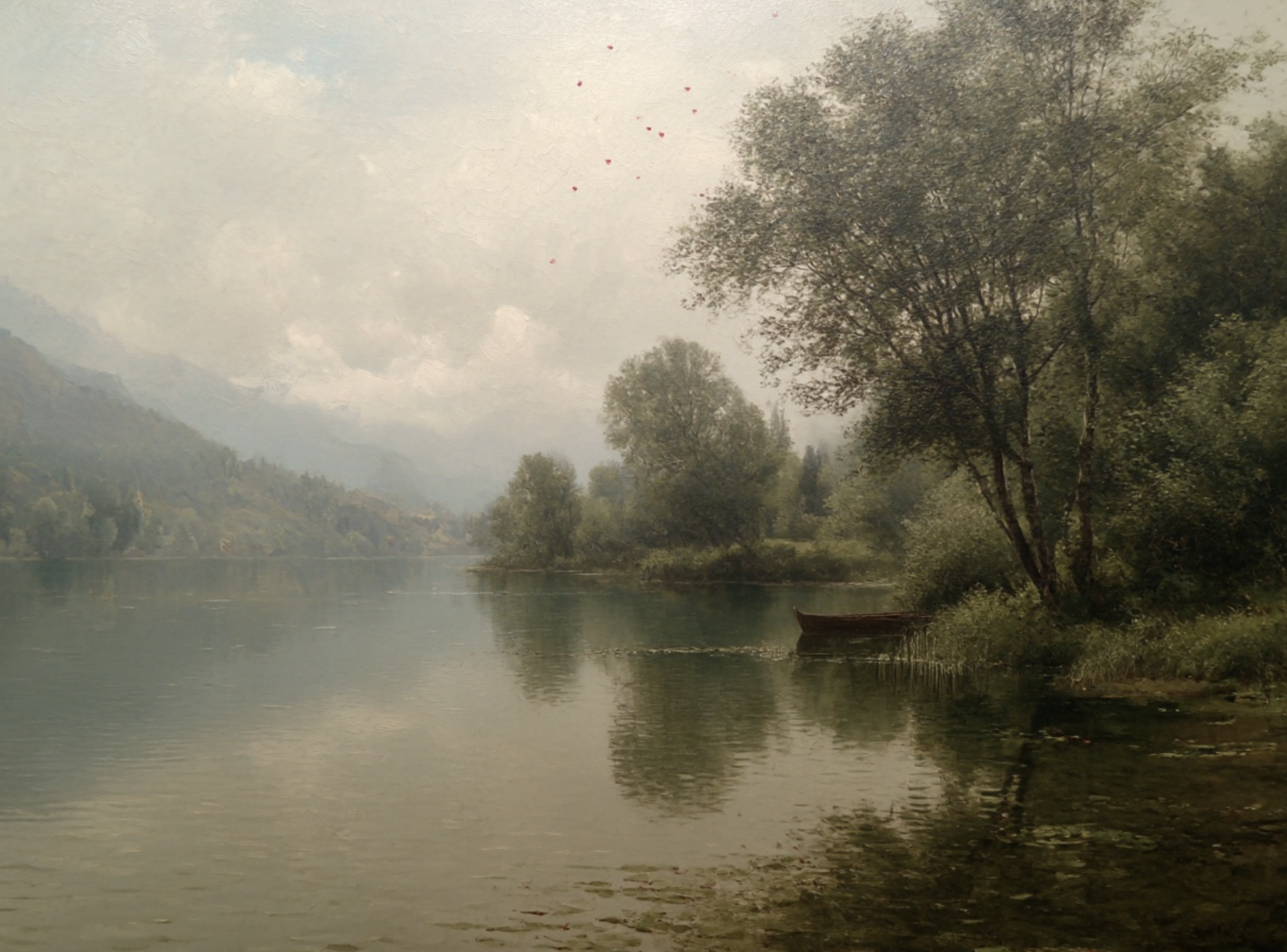
In this style, spaces are never designed under flat, overhead, or even sunlight. The palette is mixed specifically to respond to low-direction, low-wattage, and flickering light source physics. The deep greens, muddy ochres, and tarnished metals don't absorb light; they hold it, creating a soft, smoky (sfumato) depth where corners blur and the walls feel thick and protective.
2. Chronological Layering (The Anti-Showroom Continuity)
A standard interior style buys everything from a singular era or catalog. Historiographic Realism demands that a room looks like an accumulation of time. The avant-garde, clean curve of a burl-wood waterfall console sits directly next to a 19th-century secretary desk because the style assumes the "character" inhabiting the room has inherited pieces, collected pieces, and commissioned new pieces. It mimics the natural timeline of a multigenerational family estate.
3. Tectonic Mass (The Weight of the Object)
The style completely rejects lightweight, hollow, or synthetic modern manufacturing. Every object introduced must have a physical, tectonic gravity. If it is a table, it is fluted travertine or solid burl; if it is a textile, it is heavy velvet with brush fringe or raw linen; if it is a cabinet, it is painted wood with heavy historic moldings. The materials themselves feel like structural architectural components.