

FIELD/NOTES
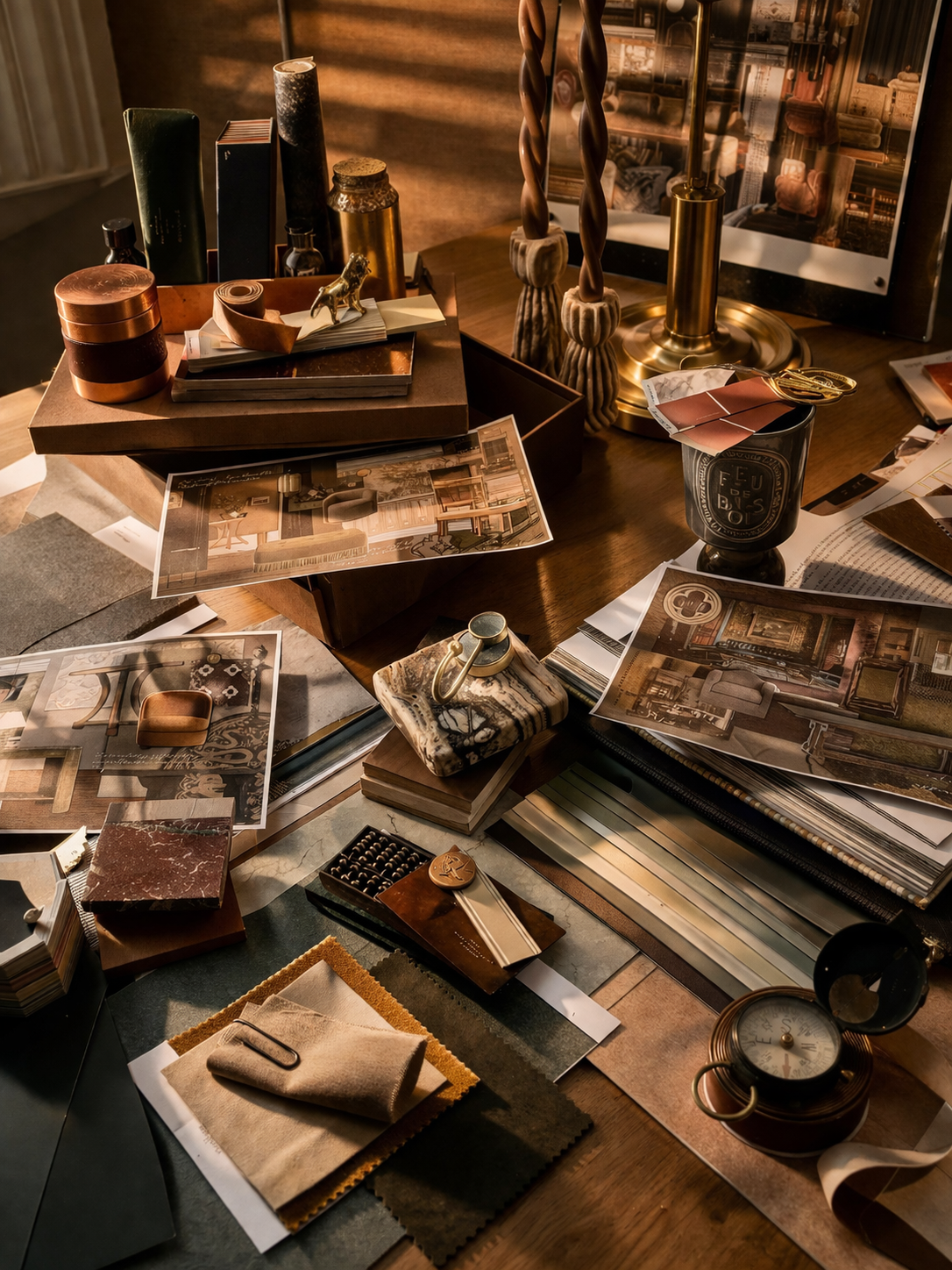
Field Notes document the active evolution of SLOANEHOME in real time — part journal, part working archive, part construction record. It functions simultaneously as a public-facing editorial log and an operational layer for collaborators, preserving material studies, site observations, references, directives, and atmospheric decisions as projects develop. Rather than separating process from presentation, Field Notes treats the making of the work itself as part of the archive.
FROM THE DESIGN BOARD
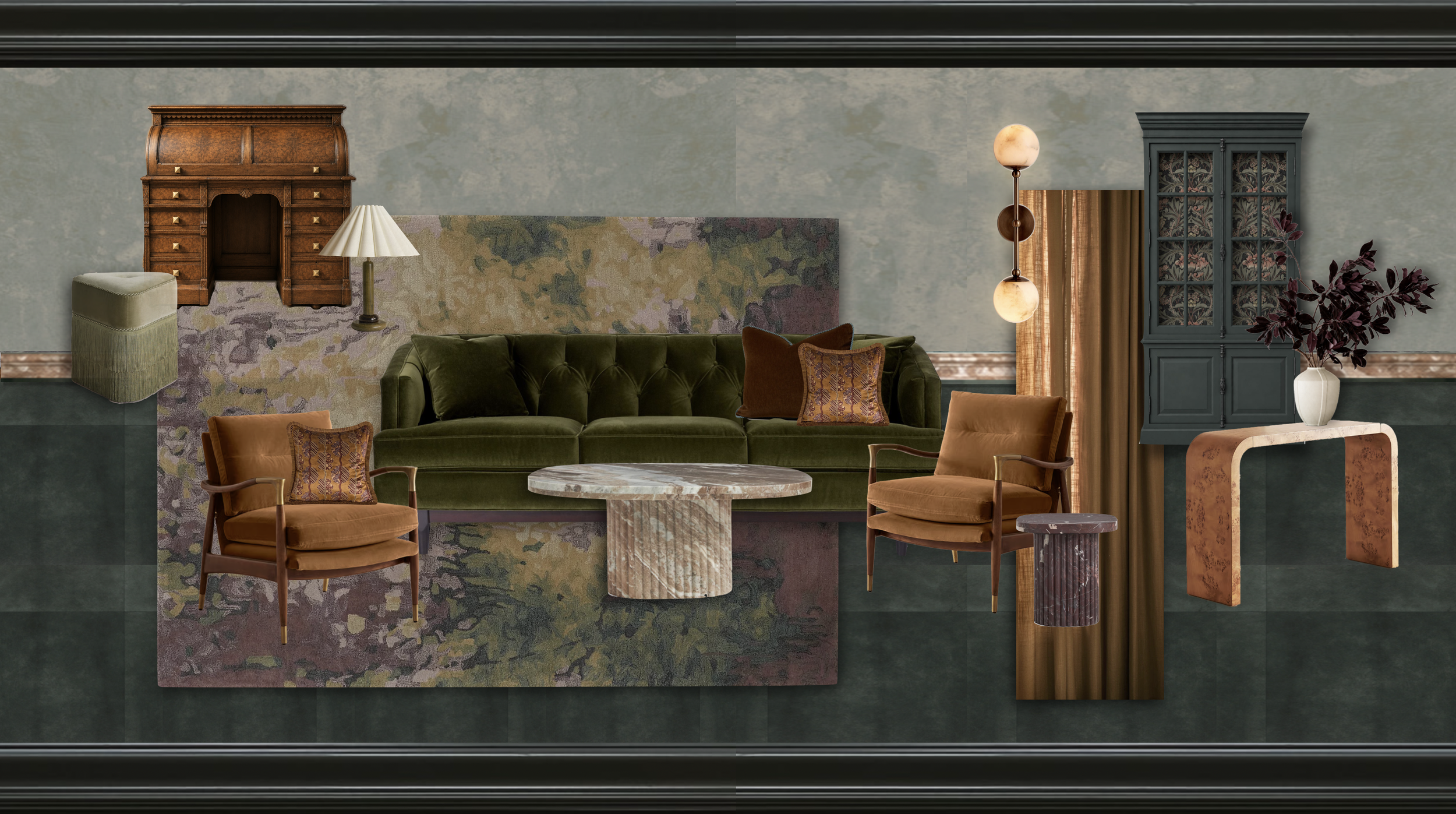
What has gradually emerged during the studies for ‘The Golden Reule’ design, is the realization that preservation and modernity need not exist in opposition to one another. Historic interiors are too often forced into one of two extremes: either preserved as frozen period rooms, trapped beneath the weight of historical reenactment, or stripped into neutral architectural shells interrupted by sharp contemporary contrast. The house has resisted both conditions. Its Gothic Revival proportions, mineral surfaces, deep shadow lines, and accumulated atmosphere suggest another path entirely — one less concerned with stylistic purity than with emotional continuity. What has begun to take shape is neither maximalist historicism nor contemporary minimalism, neither English country-house nostalgia nor the polished sterility of modern luxury interiors. Instead, the work seems to evolve outward from the atmospheric traditions of the American Picturesque, from civic Gothic architecture, from old libraries, conservatories, faded garden estates, and the quiet melancholy of Upstate New York itself. Over time, this language reveals itself as a form of Preservation Modernism: an approach rooted in continuity, atmosphere, and the belief that rooms may continue evolving without severing themselves from memory.
Within that framework, contemporary interventions are no longer treated as deliberate contrast, but as if drawn outward from the emotional life already present within the architecture. Oxidized greens, plum undertones, reflective ceilings, softened brass, painterly rugs, mineral washes, and sculptural contemporary forms begin to behave less like decoration and more like atmospheric residue gathered over time. The goal is not to restore the house to a singular historical moment, but to allow it to continue living with dignity into the present. Atmosphere becomes as important as preservation itself: the sensation of late afternoon light against glossy surfaces, the heaviness of old wood floors beneath muted textiles, the feeling that the room remembers previous generations while remaining fully inhabited by the current one. Modernity ceases to imply rupture or replacement. It becomes another layer within the long emotional continuity of the house.
PAINT + MOULDING NOTES
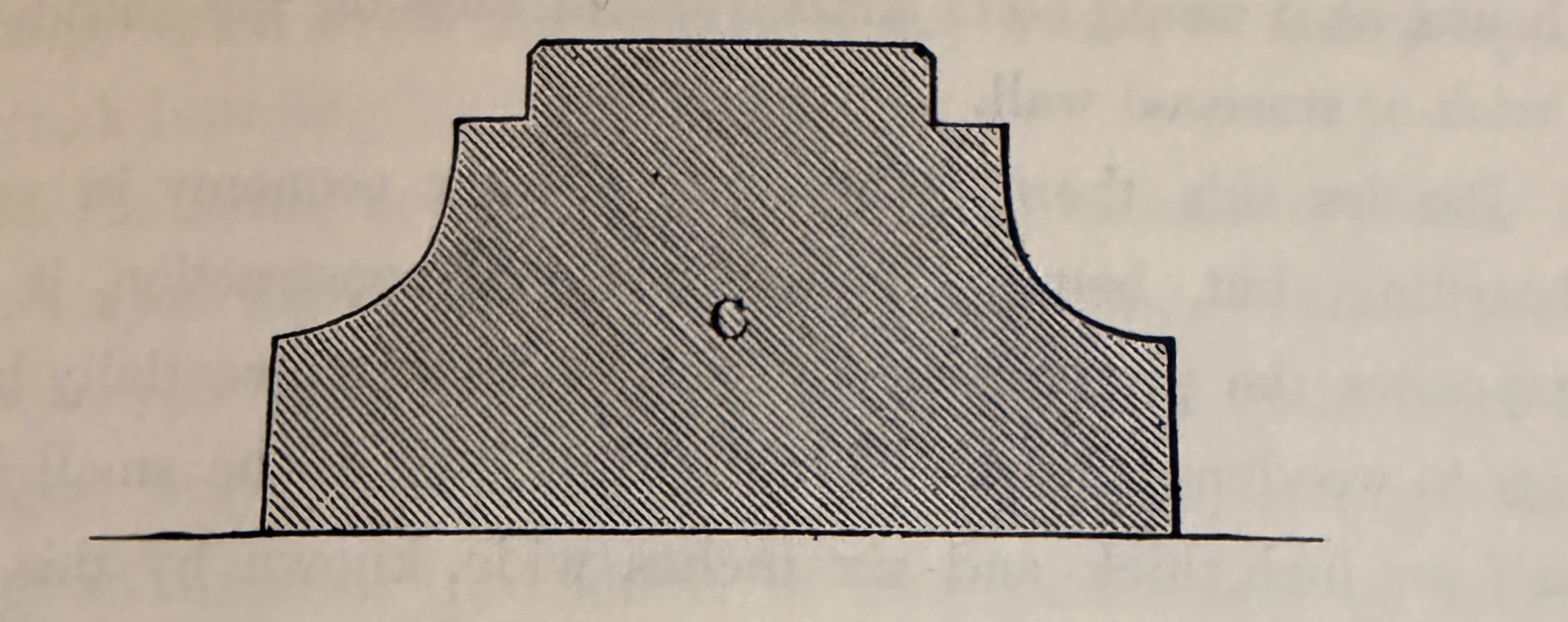
FIG C. The Architecture of Country Housed. A.J. Downing. Meant for exterior Batten, but being used in Study 01 as interior moulding with faux finish.
ACTIVE INTERIOR
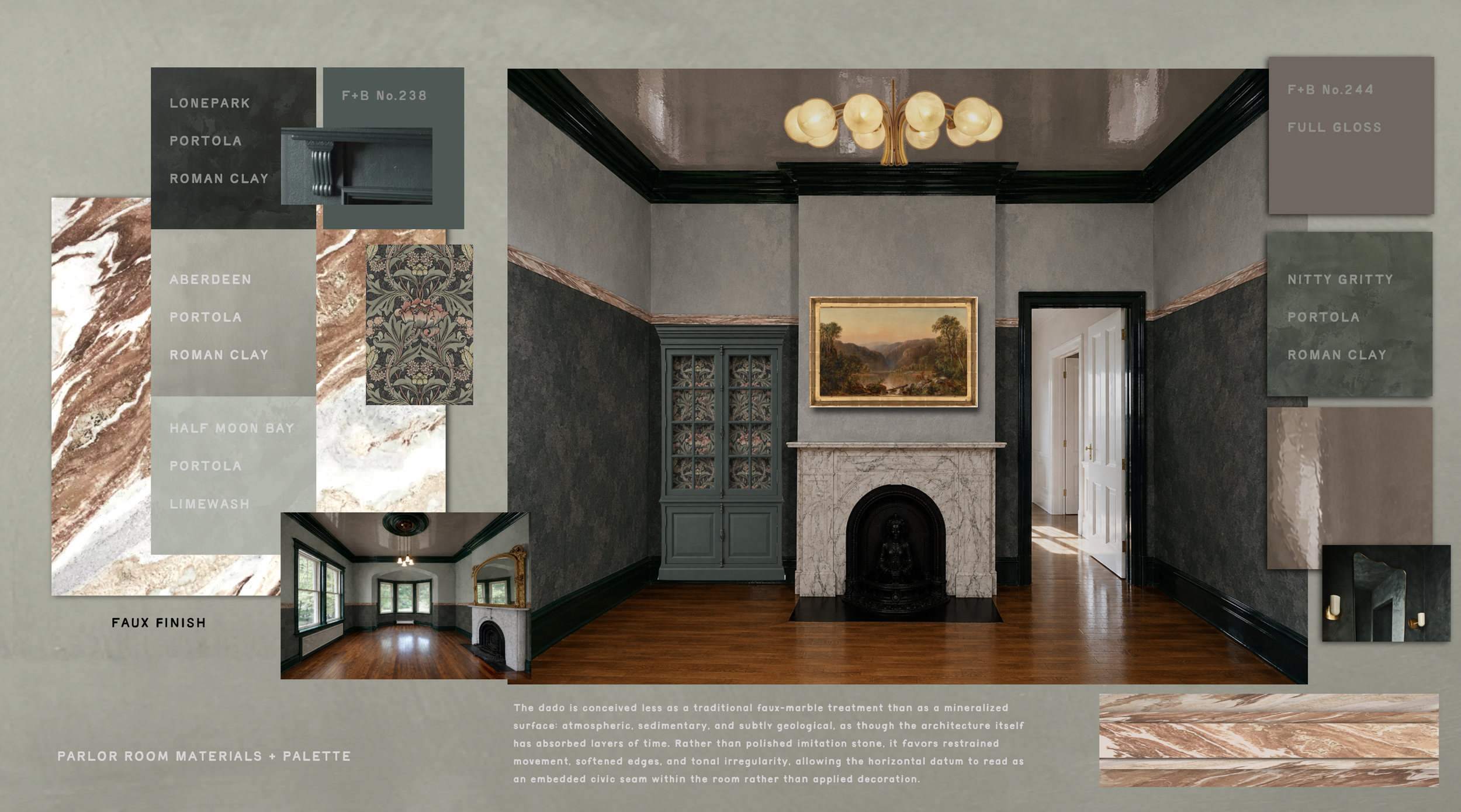
FAUX MARBLE FINISH — KEY CHARACTERISTICS
Atmospheric rather than decorative
Inspired by sedimentary stone and softened mineral surfaces
Restrained tonal movement with low-contrast veining
Warm, aged, calcified palette — not high luxury polish
References the marble dining and coffee tables already selected for the interiors
Intended to feel absorbed into the architecture over time
Subtle room-to-room tonal variation encouraged
Emphasis on light absorption, shadow, and changing ambient conditions
Scenic painting sensibility preferred over literal stone replication
Slight ambiguity and dissolution of detail encouraged
Matte to low-sheen finish preferred over gloss
Should evoke faded civic romanticism rather than ornate historicism
Colors may include ash rose, parchment cream, dusty sienna, oxidized clay, softened mineral pinks, warm travertine, and muted tobacco tones
Finish should remain quiet enough to allow furnishings and objects to retain prominence
CARPENTRY & MOULDING — KEY CHARACTERISTICS
Derived from Gothic Revival profile language found in The Architecture of Country Houses by A. J. Downing
Functions simultaneously as picture rail and chair rail
Intended as a continuous architectural datum throughout the house
Profile should feel architectural, calm, and weighty rather than ornamental
Avoid exaggerated Victorian sharpness or overly decorative interpretation
Broad transitions and softened curvature preferred over crisp “builder-grade” profiles
Precision and continuity more important than excessive detail
Consistent shadow lines and clean repetition essential
Should read as integrated architecture rather than applied trim
Designed to interact strongly with candlelight and low ambient lighting
Intended to bridge Carpenter Gothic, atelier modernism, and institutional Americana
Historical inspiration should feel distilled and restrained, not theatrical or themed
Craftsmanship should prioritize proportion, rhythm, and material presence
Final effect should feel authored and permanent, not decorative or trend-driven
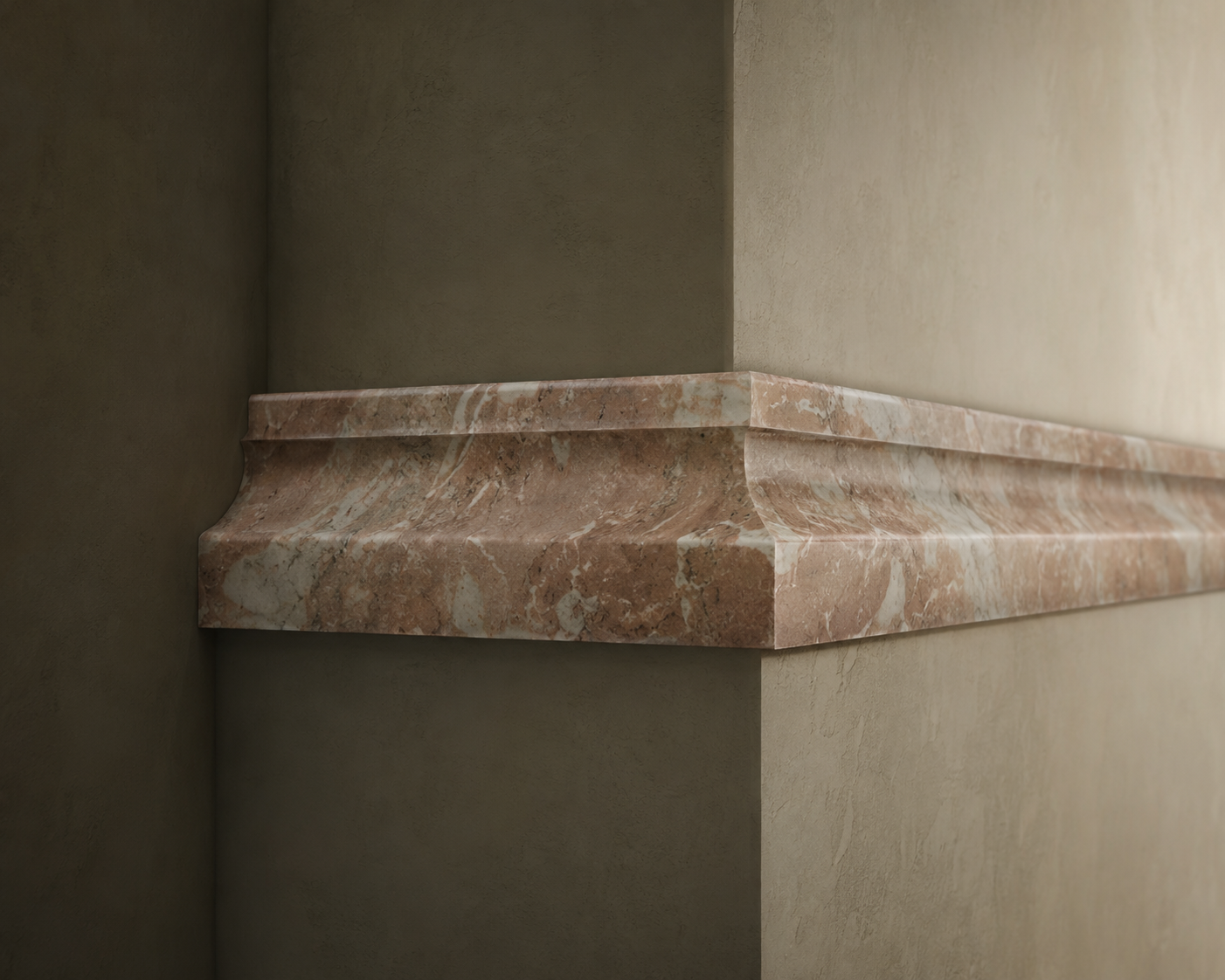
The intent for the moulding system at The Golden Reule is not decorative reproduction, but the creation of a continuous architectural datum throughout the house derived from historic Gothic Revival precedent, specifically the restrained profile language found within Andrew Jackson Downing’s The Architecture of Country Houses. The selected profile functions simultaneously as picture rail and chair rail, establishing a singular horizontal line that moves continuously through the interiors and unifies the rooms architecturally rather than ornamentally.
The moulding profile itself should retain a sense of mass and calm restraint. It is not intended to read as conventional Victorian trim, nor as overly ornate “historic” millwork. The geometry should feel softened by time and proportioned architecturally, with broad transitions and controlled curvature rather than sharp decorative exaggeration. The carpenter should prioritize clean continuity, accurate repetition, and subtle shadow over excessive crispness or ornamental sharpness. This profile is intended to feel almost civic or institutional in character — as though it belongs equally to a conservatory, observatory, atelier, or domestic interior.
The finish treatment will be executed in faux marble by hand painters/scenic artists and should be understood as atmospheric mineral painting rather than literal stone imitation. The primary references are drawn from the marble surfaces of the dining and coffee tables currently being introduced into the project. These objects will act as tonal anchors for the broader architectural palette. The rail system should therefore feel related to these stones, but never perfectly matched. The architecture should behave as a softened atmospheric echo of the furnishings rather than a direct duplication of them.
The desired effect is restrained, mineral, aged, and cinematic. The finish should avoid high-contrast veining, excessive gloss, theatrical luxury effects, or overly resolved stone simulation. Instead, the work should feel sedimentary, calcified, slightly weathered, and absorbed into the architecture over time. Tonal movement should remain subtle and diffuse, with an emphasis on warmth, mineral depth, and light absorption. Moments of ambiguity are encouraged. The strongest areas may be those where the marble effect nearly disappears into color and texture before quietly re-emerging in changing light conditions.
The palette should draw from softened stone tones such as ash rose, oxidized parchment, dusty sienna, warm calcite, muted tobacco, faded mineral pinks, dry clay, and softened travertine creams. Slight shifts in coloration from room to room are intentional and encouraged, allowing the house to develop a gradual atmospheric progression rather than a single repetitive treatment. The profile should remain constant while the mineral character subtly evolves across the interiors.
Lighting behavior is essential to the success of the work. The broad shoulders and curved transitions of the moulding are intended to catch changing daylight, candlelight, and lamplight differently throughout the day. Painters should think carefully about how the finish behaves in shadow and reflected warmth, not simply how it appears under direct frontal light.
Conceptually, this system draws equally from Gothic Revival architecture, scenic painting traditions, American domestic romanticism, and cinematic production design. The goal is not nostalgia, nor decorative historicism, but the creation of a living architectural surface language unique to The Golden Reule.
ON OBSERVATION
The Quiet Architecture of Looking
There is a profound difference between a space that is assembled and a space that is truly understood.
The environments that stay with us—the rooms that feel like a living canvas, holding memory, continuity, and an quiet sense of grace—are rarely born of casual acquisition. They are built through a far gentler, more deliberate discipline: the simple authority of an attentive eye.
To look deeply at a thing is an act of reverence. It requires a willingness to slow down, to sit among the faded ink of regional archives, and to study the subtle geometry of a 19th-century facade. It means observing how the late afternoon lakeside light catches a raw linen weave, or finding meaning in the honest patina of a utilitarian silver pitcher.
The Crafted Stage
When a home is approached through the patient lens of production design, it ceases to be a mere collection of objects. It becomes a carefully composed sanctuary. Every finish, every molding, and every artifact is chosen not to project a status, but to honor an architectural truth.
This is the core conviction beneath SLOANEHOME.
We do not seek fleeting design trends, nor do we wish to impose an engineered grandeur. Our practice is rooted in simple connoisseurship—the quiet curation of spaces and objects by an eye dedicated to the slow work of world-building. We believe that true heritage is found in the integrity of the materials we touch and the histories we choose to preserve.
Beauty is not a passive inheritance. It is a slow, thoughtful conversation between the maker, the history, and the place.
REGISTRY LOG // ITEM ID: FUR-01-PR
SPECIMEN NO. 01: THE ARCHIVAL VITRINE CABINET
TAXONOMY: Perimeter Structural Vault / Storage Core
DIMENSIONS: 42.0" W x 18.0" D x 84.0" H
COMPOSITION: Solid European Ash frame, hand-planed joinery. Architectural crown molding profile. Triple-column, eight-pane true divided lite tempered glass doors.
FINISH SPECIFICATION: Hand-rubbed, low-chroma bone-black milk paint with an unlacquered, matte slate tarnish.
INTERIOR HARDWARE: Cast-iron drop-ring pull latches, oil-rubbed historical iron barrel hinges.
REGISTRY LOG // ITEM ID: FUR-02-PR
SPECIMEN NO. 02: THE ATELIER CYLINDER SECRETARY
TAXONOMY: Primary Scholar Workspace / Document Hub
DIMENSIONS: 38.0" W x 22.0" D x 44.5" H
COMPOSITION: Wild-grained Walnut hardwood substrate. Radiuses wood mechanical cylinder roll-top curtain. Multi-tier interior document cubbies and six hand-dovetailed miniature catalog drawers.
FINISH SPECIFICATION: Hand-polished, highly figured Carpathian Elm Burl veneer face matching. Finished in a low-gloss, warm amber shellac coat.
BASE MECHANICS: Four graduating structural storage drawers with inset antiqued brass keyhole escutcheons.
REGISTRY LOG // ITEM ID: FUR-03-PR
SPECIMEN NO. 03: THE SFUMATO TUFTED COUCH
TAXONOMY: Central Lounge Hearth / Shadow Trap
DIMENSIONS: 90.0" W x 38.0" D x 29.5" H
COMPOSITION: Solid kiln-dried Maple inner structural frame. Deep-set, hand-tied diamond button tufting across the interior backrest and low-profile arms. Loose down-wrapped structural core bench seat cushion.
FINISH SPECIFICATION: High-pile, 100% cotton-mohair velvet in low-chroma Deep Moss/Olive [Ref: SM-704].
BASE SUPPORT: Recessed, turned Walnut support legs with raw, unpolished low-key brass casters.
REGISTRY LOG // ITEM ID: FUR-04-PR
SPECIMEN NO. 04: THE TECTONIC COLUMN COFFEE TABLE
TAXONOMY: Low Monolithic Centerpiece / Stone Core
DIMENSIONS: 36.0" Diameter x 14.5" H
COMPOSITION: Solid-carved, fluted Columnar Travertine and Rosso Levanto marble blocks.
FINISH SPECIFICATION: Honed, unpolished, non-reflective material face. Preserves the deep liver-crimson ground and white quartz mineral fault lines of the raw stone block [Ref: RL-91].
JOINERY MATRICES: Invisible internal steel alignment pins anchor the heavy, bullnose-edged round top slab to the vertical fluted column base.
REGISTRY LOG // ITEM ID: FUR-05-PR
SPECIMEN NO. 05: THE FLOATING LOUNGE CHAIRS
TAXONOMY: Mid-Century Rationalist Seating Pair
DIMENSIONS: 29.5" W x 31.0" D x 32.5" H
COMPOSITION: Exposed, sculptural fluid-arc American Black Walnut wood armrests and leg framing. Tensioned inner webbed support baseline.
FINISH SPECIFICATION: Matte, zero-VOC natural oil finish on raw wood. Upholstered in a high-density, low-chroma Amber/Tobacco boiled-wool weave texturing.
HARDWARE FOOTPRINT: Countersunk interior brass joinery fasteners with flush timber plugs.
REGISTRY LOG // ITEM ID: FUR-06-PR
SPECIMEN NO. 06: THE WATERFALL VANITY DESK
TAXONOMY: Contemporary Contoured Cantilever Console
DIMENSIONS: 48.0" W x 16.0" D x 30.0" H
COMPOSITION: Layered structural ply geometry formed into a seamless, continuous, borderless waterfall arc.
FINISH SPECIFICATION: Book-matched, open-pore exotic Amboyna Burl or Mappa Burl wood veneer envelope. Flat, multi-layer dead-matte sealant topcoat.
BASE FOOTPRINT: Flat-ground baseline glides with a recessed lower structural return.
REGISTRY LOG // ITEM ID: FUR-07-PR
SPECIMEN NO. 07: THE FRINGE ATELIER OTTOMAN
TAXONOMY: Mobile Low Seat Specimen / Texture Companion
DIMENSIONS: 16.0" W x 16.0" D x 18.5" H
COMPOSITION: Hexagonal internal solid timber framing wrapped in high-density core cushioning.
FINISH SPECIFICATION: Sage-green dense brushed velvet textile upper pad. Lower perimeter skirt fully wrapped in a 14.0" drop of un-cut, heavy-gauge silk bullion fringe thread matching the fabric tone.
BASE RUNNERS: Concealed dual-wheel soft floor carpet casters hidden entirely beneath the fringe baseline.