

ARCHIVE RECORD 00
Selected working documents from the formation of the SLOANEHOME studio and archive.
STUDIO PAPERS
-

Strategy Summary
A concise outline of the studio’s structure, purpose, and path toward realization.
-

FOUNDING OVERVIEW
A single page document of the studio’s economic model and founding structure.
-

ARCHIVE PROSPECTUS
The intellectual structure of the SLOANEHOME archive and focus toward long-term development.
-

FOUNDERS ARCHIVE BOX
The first numbered archival volume documenting the origins of the studio.
I — The Source
SLOANEHOME is a studio, intended retail environment, and living archive rooted in place. The project begins with a physical site in Skaneateles, New York—an historic village whose architectural character and regional traditions provide the grounding for the studio’s research into domestic form. At its center is a single working table that functions both as a practical surface for design work and as a symbolic stage or tableau. Objects, materials, books, and architectural fragments are studied and arranged on this table, and from these arrangements emerge interior concepts, product ideas, and narrative environments. The table therefore operates as both laboratory and theater: a place where ideas about the home are examined, documented, and ultimately translated into spaces that people can inhabit.
The studio’s discoveries are recorded through an evolving archival structure known as the Archive Box series. Each box preserves a stage in the development of the studio’s work, gathering material studies, written observations, design palettes, and visual documentation into a single physical record. The first volume, titled The Golden Reule, anchors the archive in the restoration of a rare Gothic Revival picturesque house whose architectural lineage helped shape the domestic imagination of the region. By preserving this work in physical archival form, the studio produces objects that function simultaneously as documentation, collectible artifacts, and intellectual property. Early supporters may participate in the formation of the archive through a limited Founders distribution of these inaugural volumes, helping to establish the studio while receiving a tangible piece of the archive itself.
II — The Archive
From this archive emerge what are called Domestic Study Editions—authored documents that translate the logic of an interior environment into a form that can circulate more broadly. Rather than selling decoration or trend-based products, these editions present the intellectual framework of a room: color palettes, material relationships, spatial compositions, and written reflections explaining the philosophy behind the environment. In this way the project revives the tradition of nineteenth-century pattern books that once carried architectural ideas from one place into the wider culture. The intention is to allow the atmosphere of a place to be interpreted and recreated elsewhere while still remaining rooted in the landscape and memory from which it emerged.
The proposed physical storefront on East Genesee Street functions as the visible expression of this system. Within the space, the front windows operate as carefully composed installations rather than conventional retail displays. Each installation grows from an archive study and demonstrates the aesthetic framework behind it. Visitors encounter the work as a series of evolving environments—tableaux that reveal the relationship between objects, architecture, and daily ritual. Retail offerings focus on heirloom-quality domestic goods presented with the same care and reverence often associated with jewelry or fine stationery, reinforcing the idea that everyday objects can carry cultural meaning as well as practical use.
The structure of the project is designed to remain both modest and scalable. The storefront begins as a small and carefully composed studio environment supported by a restrained interior buildout and a limited offering of thoughtfully sourced goods. Because the archive serves as the intellectual engine of the project, the same body of research can generate interiors, publications, collectible editions, and cultural programming from a single core practice. In this way the studio operates less as a conventional retail business and more as a place where design research gradually expands into multiple forms.
III — The Place
The broader framework of the work can be understood as a triangular system. SLOANEHOME functions as the studio and physical environment where interiors and objects are developed. The Arcadian serves as the deeper archival layer preserving the research, documentation, and narrative context surrounding the work. Over time these environments may also give rise to cinematic storytelling, as the spaces themselves begin to suggest narratives that extend beyond architecture and into film. Rather than constructing environments for stories, the studio studies real places until their histories and atmospheres begin to suggest stories of their own.
Andrew M. Sloane operates at the intersection of disciplines that rarely converge. Raised in Central New York and working across national creative industries, his practice bridges rural place and contemporary media, analog craft and digital production. Early work in luxury retail and window design established a foundation in spatial storytelling—environments composed through objects, light, and atmosphere. That sensibility expanded through a career in film and television production design, where architecture and material composition generate complete visual worlds. In Skaneateles, Sloane has also led creative direction and brand identity work for Captivate Wellness, reinforcing his connection to the cultural landscape of the village. SLOANEHOME brings these threads together as a place-based studio where cinematic environment building returns to the scale of the domestic interior and to the material culture of the region from which it emerges.
The project therefore grows outward from a single table into a wider cultural ecosystem. What begins as the study of objects becomes the design of interiors; what begins as an archive becomes a publishing platform; what begins as a storefront becomes a stage upon which environments—and eventually stories—are revealed. In this way the studio gradually gathers collaborators, makers, and patrons around the work itself, assuming the character of what earlier generations would have recognized as a guild: a place where knowledge is practiced, preserved, and carried forward through the making of things. SLOANEHOME therefore proposes a rare model—a studio that treats the domestic interior not merely as decoration or commerce, but as a cultural form capable of generating design, scholarship, and narrative from the same source.
FOUNDING OVERVIEW
SLOANEHOME is a small studio and planned storefront devoted to the study of domestic interiors through objects, materials, and archival documentation. The project begins with a physical location in Skaneateles, New York, where a modest street-level space will function simultaneously as studio, exhibition environment, and retail setting.
The studio operates around a single working table where objects, architectural fragments, books, and materials are studied and arranged. From these observations emerge interior design concepts, curated domestic objects, and written documentation preserved through the SLOANEHOME Archive Box series.
The storefront on East Genesee Street will introduce this work to the public through carefully composed window installations and a small selection of heirloom-quality domestic goods. These objects are presented not as trend-based retail but as artifacts connected to the studio’s research into place, architecture, and the cultural life of the home.
The initial launch of the studio is intentionally modest in scale. A restrained interior buildout, limited inventory, and careful sourcing allow the project to begin within a manageable financial structure. Early capital may be supported through the Founders Archive Box program, which allows supporters to participate directly in the formation of the archive while helping establish the studio itself.
Because the archive serves as the intellectual engine of the project, the same body of research can generate multiple forms of value: interior design work, collectible archival editions, publications, and cultural programming. In this way the studio operates less as a conventional retail business and more as a place where design research gradually expands into a sustainable creative practice rooted in place.
ARCHIVE PROSPECTUS
The SLOANEHOME Archive records the development of a studio practice devoted to the study of domestic interiors through objects, materials, and place. Rather than treating interiors as fleeting compositions, the archive preserves the process through which environments emerge: the observation of objects, the arrangement of materials, and the gradual formation of spatial ideas.
At the center of the studio is a large working table that functions as both laboratory and stage. Objects, architectural fragments, books, and materials are studied and arranged on this surface in evolving tableaux. These arrangements become the foundation for interior compositions, written reflections, and visual documentation preserved through the Archive Box series.
Each Archive Box captures a stage in the development of the studio’s work. Material studies, sketches, photographs, and written observations are gathered into numbered volumes that document how a particular environment was conceived. These volumes function simultaneously as records of process, collectible artifacts, and intellectual documents that preserve the cultural logic of the work.
The first public archival volume, titled The Golden Reule, anchors the archive in the restoration of a rare Gothic Revival picturesque house whose architectural lineage helped shape the domestic imagination of its region. By preserving this project through physical documentation, the archive establishes the founding record of the studio’s method.
Over time the archive will grow into a living body of work that documents the formation of contemporary interiors as they pass from present study into historical record. In this way the archive proposes a simple premise: that the interiors of the present will one day be understood as artifacts of their time, and that the careful preservation of their origins allows the cultural life of the home to remain visible across generations.
FOUNDERS ARCHIVE BOX 00
The Founders Archive Box marks the beginning of the SLOANEHOME Archive. Issued in a limited edition, this inaugural volume preserves the earliest material studies, observations, and documents from which the studio’s work emerged.
Each box gathers the elements of the archive at its point of origin: material samples, written reflections, visual studies, and documentation of the first interior restoration associated with the archive. Together these contents form a physical record of the moment when the studio’s method first moved from observation into architecture.
Supporters who acquire a Founders Archive Box participate directly in the formation of the archive itself. Their support helps establish the physical studio and the archival system that documents its work. In return they receive a numbered volume that will remain part of the permanent record of the studio’s founding.
The Founders Archive Box therefore functions both as a collectible artifact and as a contribution to the cultural project the archive represents. It preserves not only the early work of the studio, but also the community of patrons whose participation allowed the archive to take form.
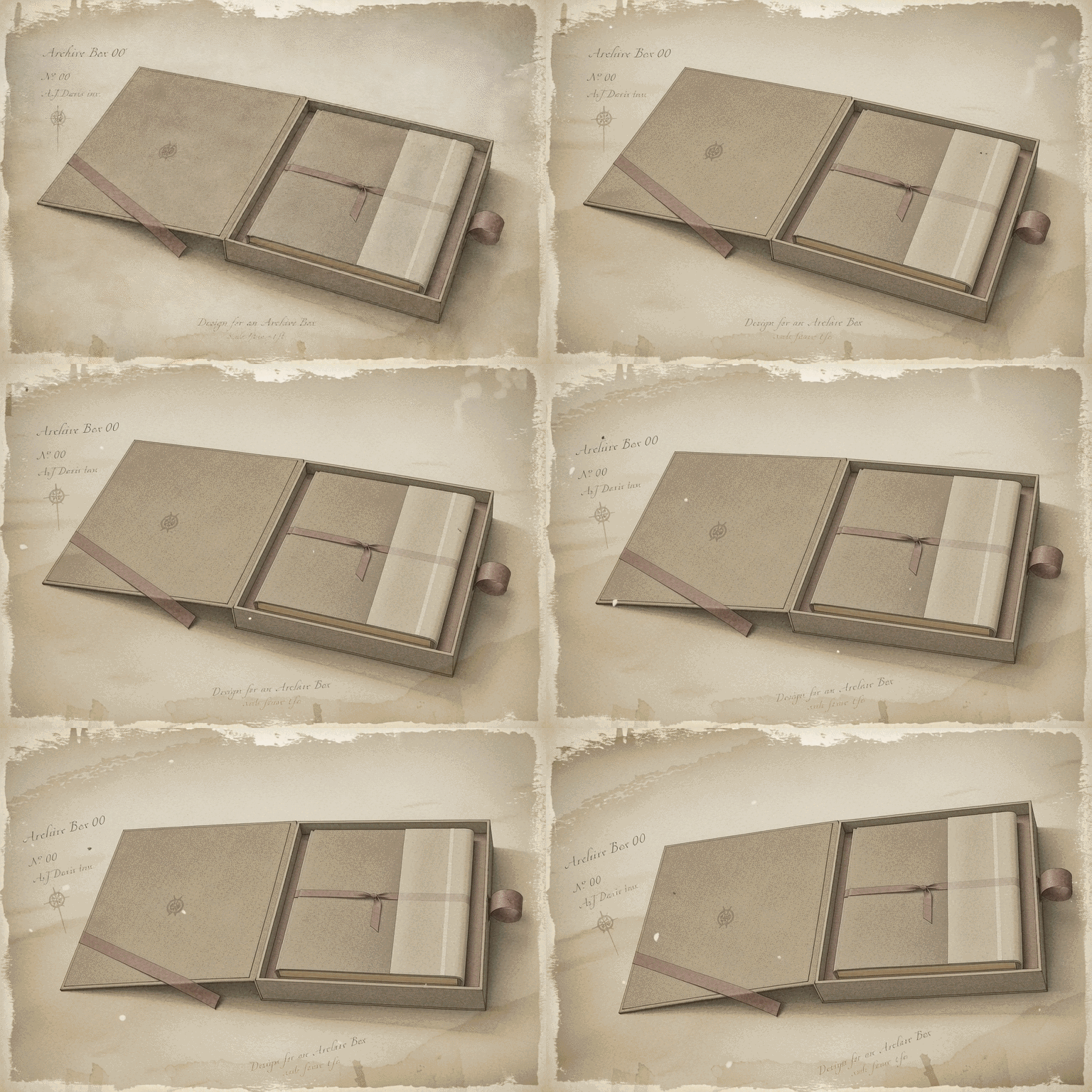
The Founders Archive Box is issued in a limited edition program and recorded within the founding ledger of the SLOANEHOME archive.
The CHARTER.
The SLOANEHOME Charter establishes the relationship between the studio, its archive, and the cultural landscape from which its work emerges. SLOANEHOME operates as a working atelier devoted to the study and construction of domestic environments, where interiors, objects, and material compositions are developed through observation, craft, and historical continuity.
The Arcadian functions as the archival body that preserves and records this work, maintaining the research, documentation, and cultural context that give each study its lineage. Together these institutions form a single practice: one that produces environments through the studio while safeguarding their intellectual record through the archive.
The Guild represents the human dimension of this structure, a circle of collaborators, craftsmen, apprentices, and patrons whose participation allows the work to move from study to reality. Through this relationship the studio remains grounded in place while its ideas circulate outward, preserving the continuity between making, memory, and the enduring forms of domestic life.

SLOANEHOME Documents maintained and protected by TheArcadian.org